404

404

PAGE NOT FOUND

Unfortunately the page you are looking for is not available.

Back to Home

Unique in Fukushima

Isasumi Shrine
History & Culture

Isasumi Shrine

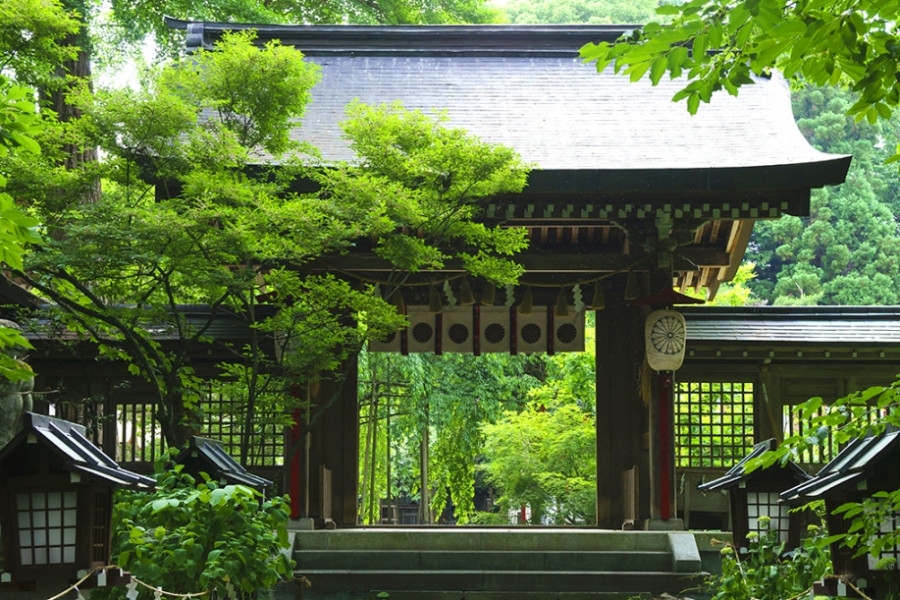
Isasumi Shrine's history is thought to be connected to how the Aizu region got its name - a story that has been recorded in two of Japan’s most legendary books of folklore. According to the tale, around 2000 years ago, four shogun were entrusted with uniting the four areas of land which would become Japan. Two of these shogun happened to be father and son. One was sent to the northeast, and the other to the northwest.When the father and son had completed their work uniting the towns in their respective areas, they met in the middle. They named the area “Aizu” (会津), which can be translated as “The riverbank (津) where we met (会)”. The father and son travelled to Mt. Mikagura-dake, a mountain that borders Niigata Prefecture and Aizu, and prayed to the Shinto god of pioneering new lands to protect Aizu, and the rest of Japan. Isasumi Shrine is thought to be built where they met.In spring, the shrine grounds become decorated with the blossoms of one of the most prized cherry trees in Aizu. It is said that this tree, which is named Usuzumi Sakura (“Diluted-Ink Sakura”), has been the sacred tree of Isasumi Shrine since it was brought down from Mt. Mikagura-dake and planted in the shrine grounds as a way of commemorating the efforts of the father and son. The lovely, light scent of the cherry blossom welcomes visitors each spring.Aizu Misato Town’s historic Isasumi Shrine, known as a great spot for viewing beautiful irises, holds a festival to celebrate the splendor of these flowers every year.
Sannokura Plateau Sunflower Field
Nature & Scenery

Sannokura Plateau Sunflower Field

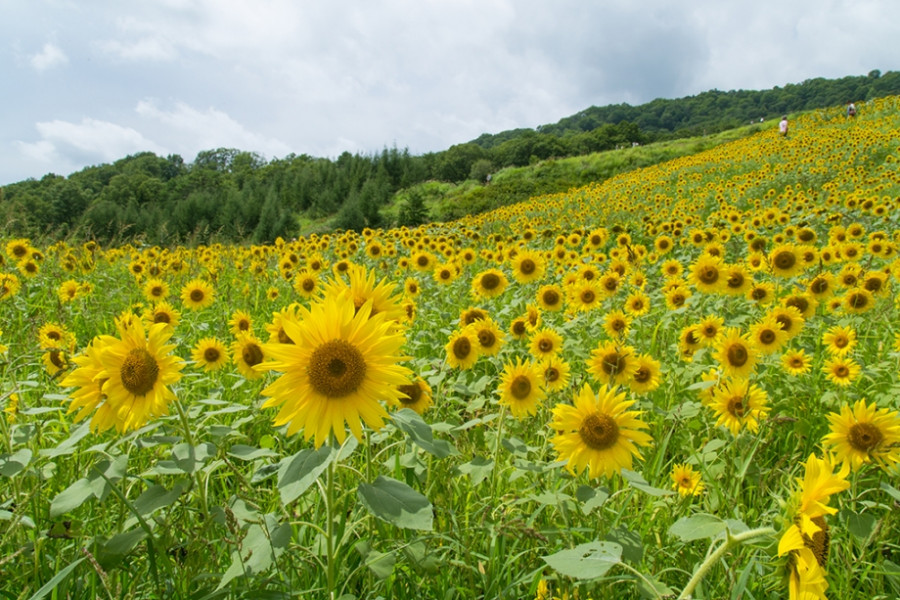
In summer, the 5.4 hectares of land within the Sannokura Ski Resort grounds become painted yellow with 1.5 million sunflowers. The sunflower field consists of 3 main areas, which can be enjoyed from early August to early September. Also, visitors to Sannokura Plateau between March and June can enjoy impressive views of fields of bright, yellow canola flowers. What's more, no matter the season, the panoramic views overlooking the Aizu basin from an elevation of 650 m make a visit to Sannokura Plateau very worthwhile. 

Ouchi-juku
History & Culture

Ouchi-juku

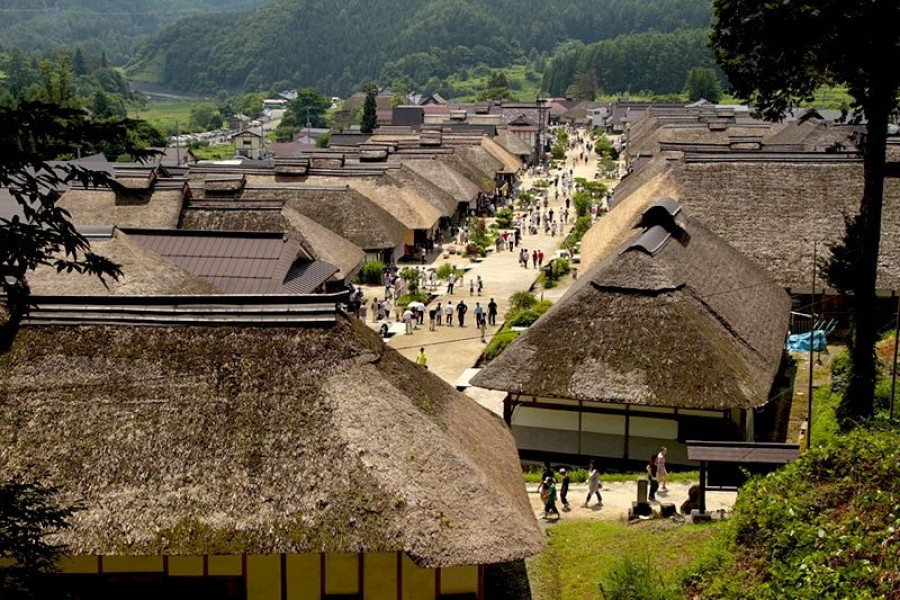
Take a journey to the past in Fukushima Prefecture’s Ouchi-juku area. This isolated village boasts thatched-roof houses and natural streets making you feel at one with the people who lived here hundreds of years ago.Nestled in the southwestern mountains of Fukushima, Ouchi-juku is a great spot to visit thanks to its unique charm and history. This village was established under the post station system of the Edo period, and played a vital role as a rest stop for travelers.In 1981, the well-preserved streets of Ouchi-juku led to it being designated as an Important Preservation District for a Group of Traditional Buildings. It isn’t difficult to see why—the village looks as it did during its heyday. And with no telephone or electric wires above ground, the view from the top of the hill overlooking the village is marvelous.It is a picturesque village where you can lose yourself to the flow of time. The traveler’s road that used to run through this village was called the Shimotsuke Kaido Route, or the Aizu Nishi Kaido Route.Ouchi-juku not only connected Aizu to Nikko, it also connected Aizu-Wakamatsu to Imaichi, a post town on the Nikko Kaido Route in Tochigi Prefecture. This road was frequented by many travelers as well as by the processions of feudal lords who had to travel to and from Edo periodically.Travelers of the Edo Period rested at the inns of Ouchi-juku to relieve their fatigue. Nowadays, festivals and events help draw in new visitors. The annual Snow Festival in February turns Ouchi-juku into a pretty candlelit scene.Visit in July to see a procession of dancers dressed in traditional Edo Period costumes, and you might even get to wear a happi (festival attire jacket) and join the locals in their celebrations!And when you’re feeling hungry be sure to try some of the local specialties, which include negi soba (fresh buckwheat noodles eaten using a green onion), stick-roasted char fish, and more.Please be aware that some restaurants are closed on Wednesdays, so lunch availability may be reduced.

Abukuma Cave
Nature & Scenery

Abukuma Cave

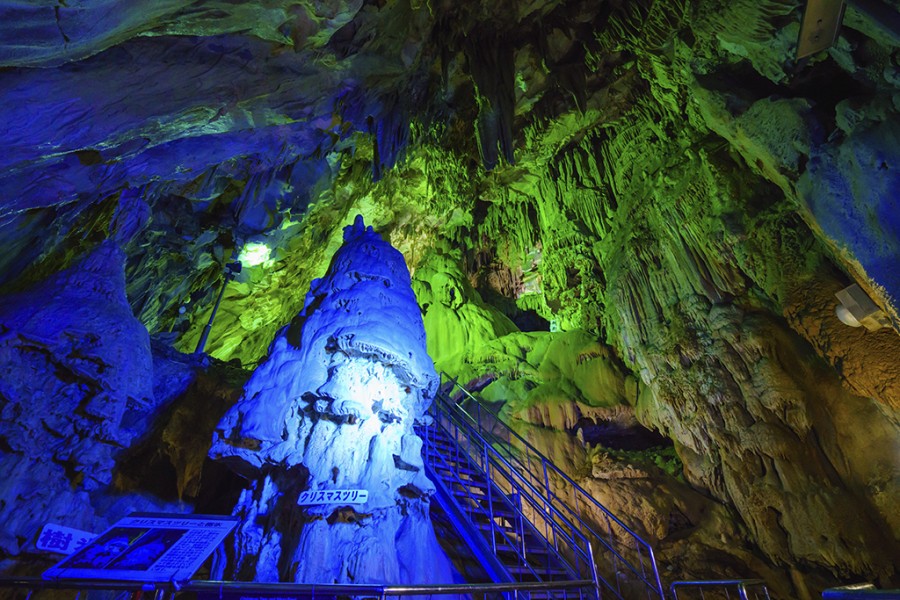
A world of mystical beauty created over millions of years, Abukuma Cave is said to have the greatest variety and the largest number of stalactites in the whole of Asia. It takes about an hour to explore the inner world of the cave and the terrain is easy to navigate on foot.Abukuma Cave is a limestone cave that was discovered in 1969. Inside, visitors can walk the 600-meter-long path to explore and view the beautiful cave formations. Visitors can’t help but be impressed by the beauty of these natural creations formed over the course of 80 million years. The largest hall in the cave, called Takine Goten (Takine Hall), and Tsuki no Sekai (The Moon World), is illuminated with dramatic stage lighting and is particularly impressive.Also not to be missed are the rare cave formations called boxwork, you can identify them by their unique shape; thin blades of minerals coming off the walls and ceilings forming a honeycomb or box-like pattern. Abukuma Cave is the only cave in Japan with boxwork that is open to the public. Another notable stop along the cave path is the Christmas Tree and Silver Frost; both are impressive stalagmites that resemble festive holiday trees. The Christmas Tree is over two meters tall and said to be the largest example in all of Asia.There is an additional thrilling adventure course; experience crawling through narrow passages and climbing a ladder to spectacular views over the cave! This 120-meter-long course runs parallel to the main passage, but please note that visitors may have to crawl on their hands and knees at times.When you have finished exploring the mysterious depths and come back to the surface you can find plenty of restaurants and souvenir shops. Visit from mid-June to July to see the neighbouring hillside covered in 50,000 lavender plants.

Top